
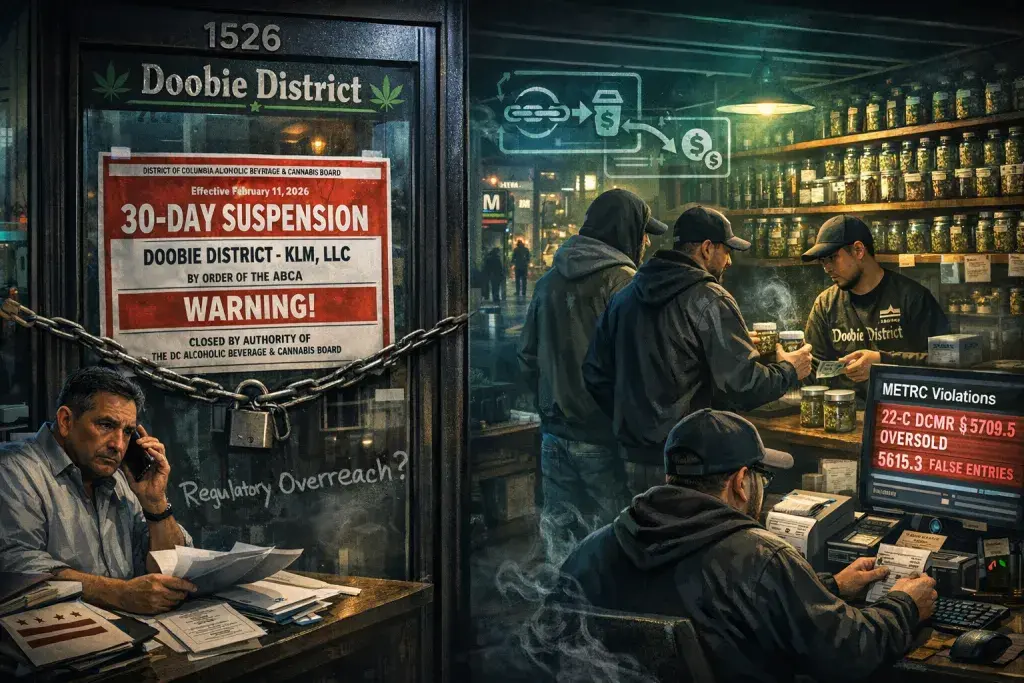
The District of Columbia Alcoholic Beverage and Cannabis Board has imposed a 30-day suspension on KLM, LLC, operating as Doobie District on U Street, for dispensing medical cannabis to unqualified buyers and falsifying records in the state's METRC tracking system. Issued February 11, 2026, this ruling underscores the Board's commitment to safeguarding medical cannabis access amid rising regulatory scrutiny in the District.
Undercover Probe Uncovers Key Violations
An ABCA investigation launched May 9, 2025, revealed systemic lapses at the 1526 U Street, NW dispensary. Undercover agents made two controlled purchases of confirmed medical cannabis without showing patient cards or caregiver credentials. Staff completed sales unchecked, printing labels with a Doobie District employee's name and ID—evidence of manipulated tracking.
- Employee's METRC account showed purchases exceeding the 8-ounce, 30-day patient limit.
- Two other patient accounts were oversold using the same credentials.
- Violations cited: 22-C DCMR § 5709.5 (dispensing to non-qualified individuals) and § 5615.3 (false METRC entries).
Dispensary Response and Board Rationale
Owner Peter Murillo stipulated to the facts, terminated implicated staff, retrained employees, and introduced personal oversight of sales volumes. Despite these steps, the Board stressed licensee accountability for supervision, noting it considered revocation but opted for suspension due to potential unaware ownership. Additional mandates include ABCA-approved training within 60 days.
Implications for DC's Medical Cannabis Landscape
This case highlights vulnerabilities in DC's medical cannabis framework, designed to ensure products reach verified patients while curbing diversion to unregulated markets. Falsified METRC data erodes trust in seed-to-sale tracking, critical for preventing oversupply that could fuel dependency or black-market flows. With DC's recreational market still nascent, such enforcement protects public health by upholding verification protocols—reducing risks like unqualified access leading to adverse effects or strained healthcare resources. As the industry matures, stricter compliance will shape safer, more equitable access amid growing demand.