The U.S. Department of Justice announced it would immediately loosen restrictions on certain marijuana products and accelerate reclassification of the drug to a less dangerous category. Denver's top licensing official responded with blunt enthusiasm - and a quiet note of urgency. The city's cannabis sector, once booming, is losing licenses at a striking rate.
A Quarter-Century Argument, Finally Gaining Ground
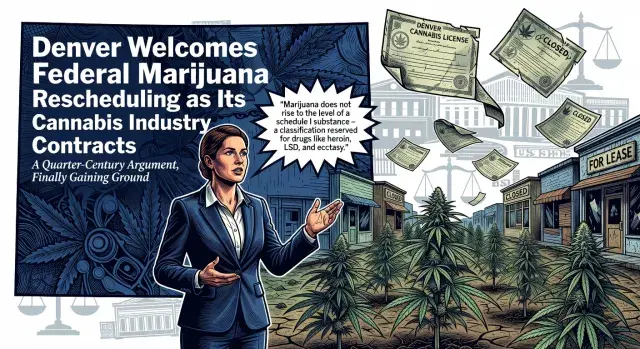
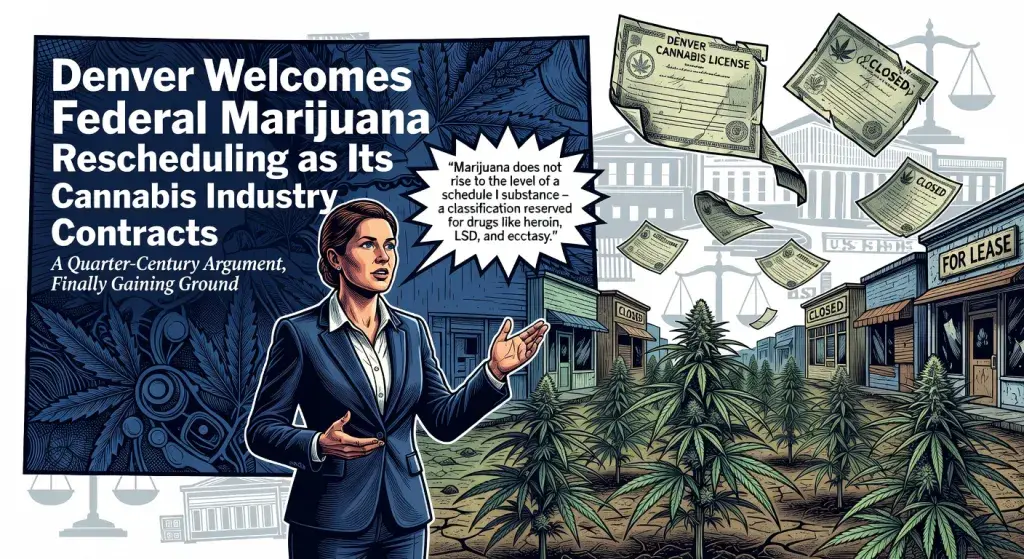
Molly Duplechian, Executive Director of Denver's Department of Licensing and Consumer Protection, framed the federal move as overdue vindication. "Marijuana does not rise to the level of a schedule I substance - a classification reserved for drugs like heroin, LSD, and ecstasy," she said in a statement. Colorado legalized medical marijuana more than 25 years ago. Denver has permitted recreational sales for 13 years. The federal government, in other words, has been roughly a generation behind.
Schedule I designation doesn't just carry symbolic weight. It has tangible downstream effects: severe restrictions on clinical research, barriers to banking, and - perhaps most painfully for cannabis operators - the denial of standard business tax deductions under Section 280E of the Internal Revenue Code. A move to Schedule III wouldn't legalize marijuana federally, but it would begin to dismantle some of the structural penalties that have squeezed state-legal operators for years.
Duplechian was explicit about what that means in practice. "A portion of the industry - largely compliant with city and state laws - may benefit from the same standard tax deductions available to other legitimate businesses," she said. That word, legitimate, does a lot of work. It signals the tension Denver's regulators have lived with for over a decade: overseeing an industry that is legal under state law and criminal under federal law.
The Numbers Tell a Harder Story
Here's the catch. While the federal shift is welcome, it arrives as Denver's medical cannabis sector is already contracting - fast.
Between April 2022 and 2026, the city's active medical marijuana store licenses dropped from 152 to 83. Medical cultivation licenses fell from 188 to 75. Licenses for medical infused product manufacturers - the companies producing edibles and similar goods - declined from 84 to 51. That's a reduction of roughly 45% across the board in just a few years.
Duplechian acknowledged as much, noting the industry is experiencing "a recession." She argued that access to normal tax deductions "could provide a crucial lifeline." The phrasing is telling. Not will provide - could. Federal rescheduling alone won't reverse the contraction. Market saturation, falling wholesale prices, competition from the illicit market, and shifting consumer preferences have all contributed to the downturn, not just in Denver but across mature cannabis markets nationwide.
What Rescheduling Does - and Doesn't - Fix
To put it plainly: Schedule III is progress, not resolution. Cannabis businesses would gain access to tax deductions and face fewer research restrictions. Medical marijuana patients in states with legal programs would see their products treated with somewhat less federal suspicion. But Schedule III still means federal regulation, still means the drug isn't fully legal, and still leaves the patchwork of state laws in place.
Duplechian's statement gestured toward this gap. She called the announcement "the first step toward responsible, comprehensive federal rescheduling" and urged lawmakers to "consider additional measures that could continue to significantly reduce the illicit market." That second point matters more than it might seem. One persistent argument against heavy regulation and taxation of legal cannabis is that it keeps the black market competitive. When licensed operators can't deduct normal business expenses, their cost structures balloon - and unlicensed sellers undercut them.
Denver's data on youth usage offers one bright spot. Duplechian noted the industry has "upheld its commitment to preventing increases in youth usage," a metric that regulators and critics alike have watched closely since legalization began. It remains one of the strongest counterarguments to prohibition-era warnings about state-level legalization.
A City Watching Its Experiment Mature
Denver didn't ask to be a test case for American cannabis policy. But that's what it became. The city built a regulatory apparatus from scratch, collected millions in tax revenue, and employed thousands of residents in a sector that didn't formally exist two decades ago. Now that sector is shrinking under economic pressure, even as the federal government finally begins to acknowledge what Colorado figured out a long time ago.
Whether Schedule III classification arrives fast enough to matter for the businesses already closing their doors is an open question. For the ones still operating, though, it's a signal - however belated - that the rules might finally start to make sense.