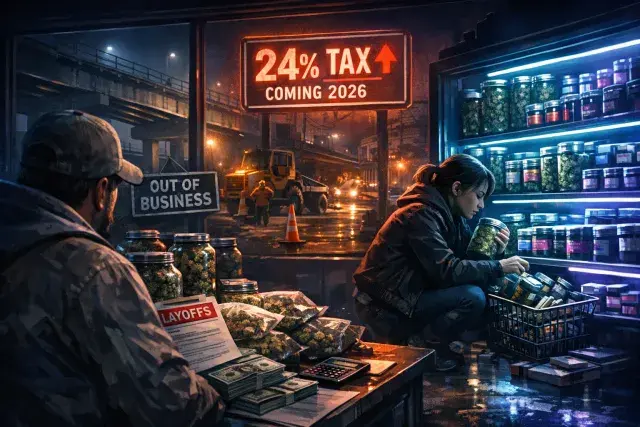

Michigan's marijuana businesses confront a 24% wholesale excise tax effective January 1, 2026, layered atop the current 10% retail tax and 6% sales tax for a total of 40%. Consumers rush to stockpile products at pre-hike prices, while growers and retailers scramble to adapt amid layoffs and closures. Lawmakers aim to channel over $400 million annually into roads, bridges, and infrastructure repairs.
Businesses Cut Costs as Tax Pressures Mount
The tax forces operators to rethink operations in a market already strained by saturation. Eric Slutzky, CEO of Dog House Farms, described scaling back his wholesale growing business. "We've implemented things to try to get leaner. We went through every expense over the past few months with a fine-tooth comb to try and figure out what needs to happen here. We had lay-offs too," Slutzky said. Several companies have dismissed workers or ceased operations entirely, highlighting vulnerabilities in Michigan's post-legalization economy five years after voters approved recreational sales in 2018.
Retailers Stock Up to Shield Customers
Some firms prepare by bulking up inventory to hold prices steady. Aric Klar, founder of Quality Roots, explained his strategy. "Quality Roots has stocked our shelves for the next two to three months to maximize our ability to keep our price points where they've been and hopefully continue to keep them as long as we can," Klar said. This approach buys time against immediate pass-through costs, though prolonged effects could squeeze margins further in a competitive landscape.
Consumers Stockpile Amid Mixed Reactions
Buyers in places like Berkley seize the moment before prices rise. Sam, a local user, called the hike unfortunate: "When I heard the news, I was definitely surprised. It's definitely going to have a huge impact, so I plan on stocking up before midnight." Kristin Hinchman agreed, adding, "I think that's probably a great idea for a consumer to do today before the prices increase that much." Brenden Bowers voiced ambivalence: "I feel like it makes sense to a certain extent, but on the other hand, they can probably find that tax within other places." These responses reflect broader tensions between public revenue needs and personal affordability.
Legal Challenges and Infrastructure Goals
Industry groups contest the tax in court as the deadline nears, questioning its structure and fairness. Proponents argue the funds address Michigan's aging infrastructure, a persistent state priority amid federal cannabis prohibition that limits banking and interstate trade. The policy underscores how legalization states balance sin taxes with economic realities, potentially reshaping consumer habits and business survival long-term.