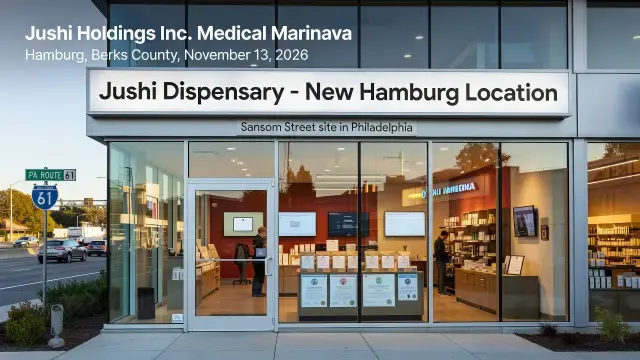
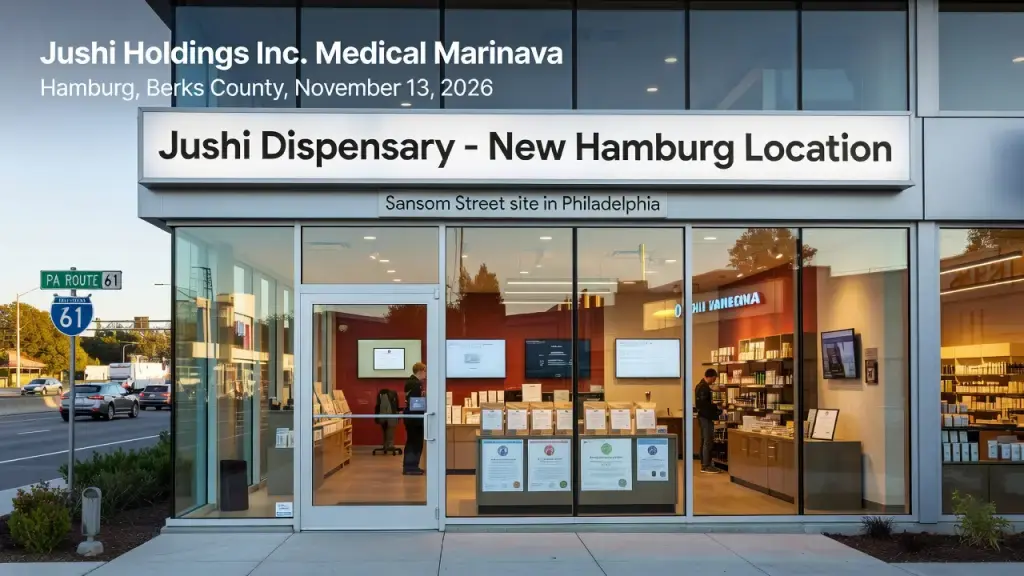
Jushi Holdings Inc. is moving one of its Pennsylvania medical marijuana dispensaries from a Sansom Street location to a new site in Hamburg, Berks County, with the relocated store opening to patients on November 13, 2026. The shift reflects a broader retail recalibration underway across the state's medical cannabis program, where operators are increasingly reassessing storefront locations based on traffic patterns, highway access, and regional demand rather than simply holding onto legacy addresses.
Why Dispensary Relocation Is a Business Decision, Not Just a Move
Relocating a licensed dispensary isn't like swapping out a retail tenant in a strip mall. Pennsylvania's medical marijuana program ties every dispensary permit to a specific address, which means moving locations requires regulatory approval through the Department of Health before a single patient walks through the door. That process touches zoning compliance, security plan review, and inventory transfer logistics - all before the new site can activate point-of-sale systems and sync with the state's seed-to-sale tracking infrastructure.
For multi-state operators like Jushi, site selection increasingly comes down to drive-time analysis and regional catchment. The Hamburg location sits near PA Route 61 and Interstate 78, a positioning that matters because patient retention in cannabis retail often hinges on convenience more than brand loyalty. A dispensary tucked into a downtown corridor with limited parking competes poorly against one embedded in a retail corridor already pulling heavy foot traffic from grocery stores and national chains. That's not a small consideration when patient visit frequency drives recurring revenue in a program where repeat business, not one-time sales, keeps the lights on.
What the Move Signals About Pennsylvania's Retail Footprint Strategy
Pennsylvania's medical cannabis market operates under a capped licensing structure, meaning operators can't simply open new stores wherever demand looks promising. Instead, companies work within their existing permit allocations, often relocating underperforming or poorly situated stores to markets with better long-term fundamentals. That's effectively what's happening here: the Sansom Street footprint is being retired in favor of a site positioned to draw from Berks, Schuylkill, and surrounding counties.
This kind of portfolio optimization matters for investors and landlords watching the cannabis retail sector, since it signals how operators are managing real estate costs against patient volume in a regulated market where margins are already squeezed by federal tax code Section 280E. Dispensaries can't deduct ordinary business expenses the way a standard retailer can, which puts added pressure on every location to perform. A poorly placed store isn't just an inconvenience - it's a drag on unit economics.
Consumer Access and Compliance Considerations Remain Central
Relocation doesn't loosen any of the underlying compliance obligations. Patients still need valid medical marijuana cards to purchase, products still move through lab testing and carry certificates of analysis, and packaging must meet state child-resistant and labeling standards regardless of which storefront handles the transaction. The grand opening sale mentioned in the announcement is a retail promotion, not a regulatory shortcut - pricing adjustments don't change age verification requirements or purchase limits under Pennsylvania law.
- Patients must present valid Pennsylvania medical marijuana certification at point of sale
- Products sold must carry lab-verified certificates of analysis and compliant packaging
- Relocated dispensaries require Department of Health approval before serving patients at the new address
- Inventory transfers must align with state seed-to-sale tracking requirements
For other operators watching Pennsylvania's medical market, this relocation is a reminder that retail success in regulated cannabis isn't just about securing a license. It's about continually reassessing where that license does the most good.