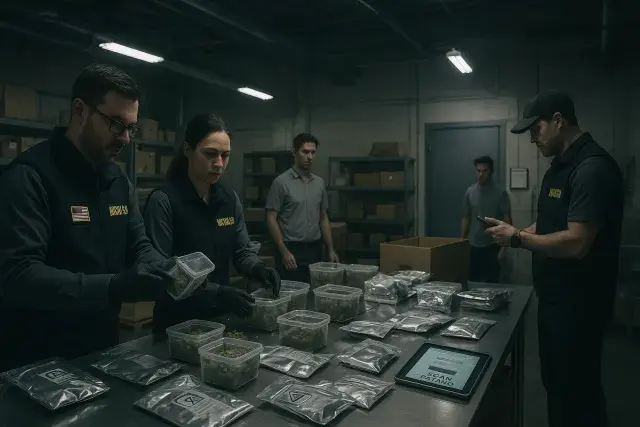
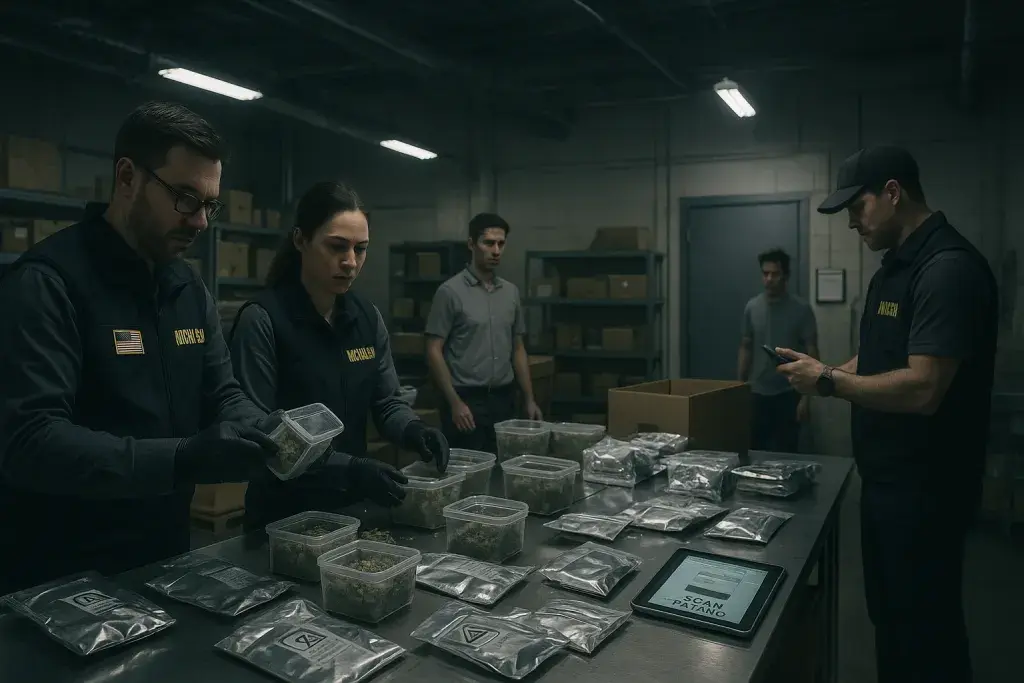
A Michigan cannabis processor is facing potential license revocation after state inspectors found more than 12,000 individual cannabis products with no Metrc tags and no identifying information at its Harrison Township facility. The Michigan Cannabis Regulatory Agency filed a formal complaint against VJAS 1 after investigators also turned up products in California-specific packaging - labeled with "CA" and carrying California-required consumer warnings - raising serious questions about whether out-of-state cannabis had entered a licensed Michigan operation. Employees on-site, according to the CRA, could not explain how or why those products were there.
The scale of the inventory gap is hard to overlook. Seed-to-sale tracking systems like Metrc exist for a single core purpose: every unit that enters or exits a licensed facility must be accounted for, logged, and tagged before it moves anywhere. A processor sitting on thousands of untagged SKUs isn't facing a recordkeeping technicality - it's facing what regulators treat as a fundamental breakdown of the compliance infrastructure that licensed cannabis markets are built on. For operators in other states running compliant facilities, tools like cannabis pos software new york and similar state-integrated platforms have made real-time inventory reconciliation a baseline expectation, not an advanced feature. The point is to make gaps like the one found at VJAS 1 functionally impossible - or at minimum, immediately visible.
What made the inspection findings worse was what investigators discovered after cross-referencing the products that did carry Metrc tags. Those tagged items were not registered to VJAS 1 - they were supposed to be located at other licensed cannabis businesses. That detail shifts the situation from "poor recordkeeping" to something regulators and prosecutors read very differently. Metrc tags are tied to specific licensees and batch records. Finding another business's tags inside your facility is not an administrative oversight. It suggests those products either moved through the supply chain without proper transfer documentation or were diverted from their intended destination entirely.
What the California Packaging Signals
The presence of California-compliant packaging inside a Michigan processing facility is, to put it plainly, a significant red flag. Cannabis remains a federally controlled substance, and interstate transport of cannabis - regardless of whether both states have legal adult-use markets - is still a federal crime. Licensed state markets operate as closed systems by design. Product cultivated, manufactured, or labeled for California's supply chain is not legally transferable to Michigan's licensed market. Full stop.
Compliant packaging in regulated cannabis markets is state-specific for a reason. California mandates particular warning language, child-resistant standards, and labeling elements that differ from Michigan's requirements. When inspectors see product in California-specific packaging sitting inside a Michigan processor, the compliance problem runs deeper than a missing tag. It raises product safety questions - were those items lab-tested to Michigan standards? Were they tested at all? Consumers and downstream retail licensees who receive products through a chain of custody that includes untracked inventory have no reliable way to verify what they're actually handling.
The Regulatory and Licensing Stakes for VJAS 1
The CRA has indicated VJAS 1 is now subject to fines along with the potential suspension, restriction, revocation, or refusal to renew its license. That range of consequences is deliberate - it reflects how Michigan structures enforcement action to match the severity of what's found. A first-time labeling error and a facility stocked with thousands of unidentifiable products are not treated the same way, and they shouldn't be.
License revocation in a regulated cannabis market doesn't just end one business. It affects employees, downstream wholesale buyers, any retail licensees who received product from that processor, and - if diversion is ultimately found - potentially exposes those parties to their own compliance reviews. Regulators in states with mature tracking infrastructure tend to follow inventory threads in both directions once a serious discrepancy surfaces.
For other Michigan licensees watching this, the operational message is straightforward: Metrc compliance isn't a background administrative task. It's the evidentiary record that demonstrates your operation is legitimate. Gaps in that record - even ones a licensee might characterize as clerical - are exactly what enforcement agencies are trained to examine. An inability to explain the presence of thousands of untagged units, including product that appears to originate outside state lines, is not a position any licensed operator wants to defend before a regulatory body.
A Broader Warning for Compliant Operators
Cases like VJAS 1 have consequences beyond the licensee named in the complaint. They feed the argument - one regulators in every legal state are familiar with - that licensed markets remain susceptible to diversion and that stricter oversight is warranted. That pressure tends to produce more frequent inspections, more detailed reporting requirements, and less regulatory flexibility for operators who are running clean businesses.
Compliance is not a cost center. It's the operating condition under which a cannabis license continues to exist.