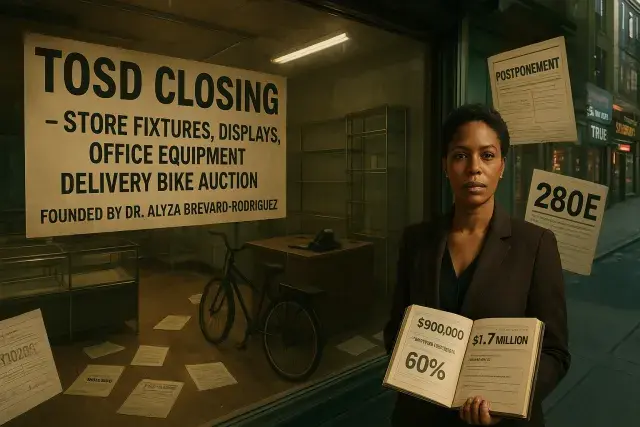
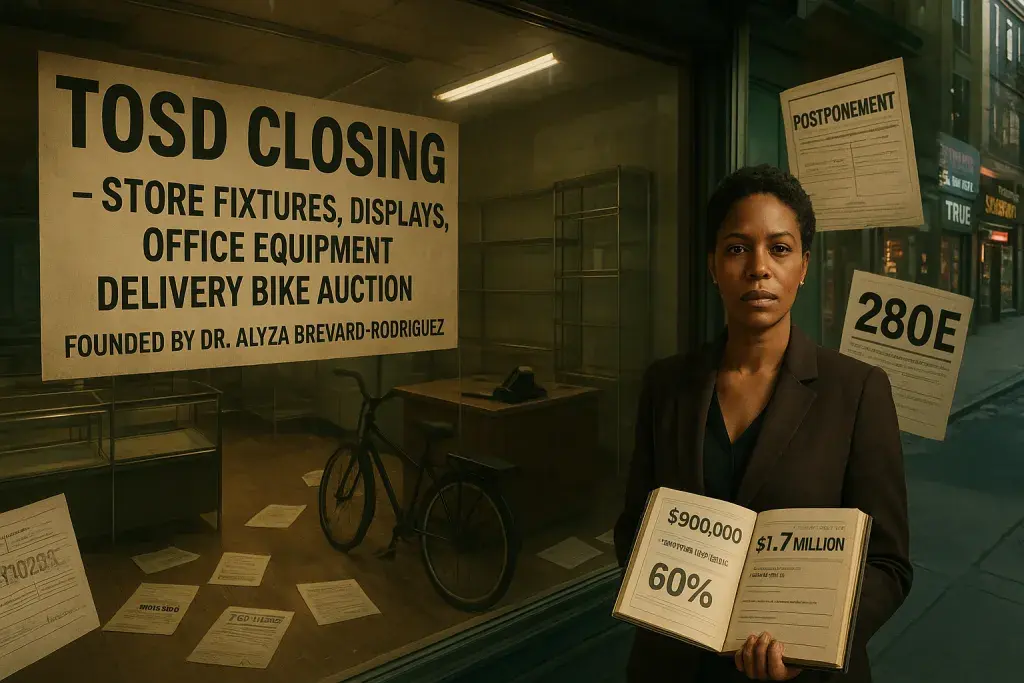
The Other Side Dispensary (TOSD), a minority- and disabled veteran-founded cannabis retailer in Jersey City, New Jersey, is shutting down and liquidating its assets - store fixtures, displays, office equipment, and even a delivery bike are all on the block. The closure, announced via LinkedIn, follows months of public statements from founder Dr. Alyza Brevard-Rodriguez attributing the business's failure not to poor performance, but to what she describes as sustained municipal obstruction and an unsustainable regulatory burden. TOSD opened in 2024, roughly two and a half years after incorporation, and was recognized as one of the first U.S. dispensaries solely funded and founded by minorities.
The numbers Brevard-Rodriguez cites are hard to dismiss. In its first year of operation, TOSD generated nearly $900,000 in net sales with gross margins exceeding 60 percent - by any retail standard, that is a high-performing single-location operation. For context, operators tracking store performance with tools like marijuana pos software oregon and similar point-of-sale platforms across regulated markets would recognize those margin figures as genuinely strong for adult-use retail. Yet TOSD still couldn't survive. The reason, according to Brevard-Rodriguez, is the structural cost layer that cannabis operators carry that no comparable licensed retail business does: more than $65,000 annually in licensing fees alone, layered on top of local and state quarterly taxes, with estimated total financial damages exceeding $1.7 million. Eight employees lost their jobs.
What Went Wrong in Jersey City
Brevard-Rodriguez documented a specific sequence of municipal failures. Repeated planning board postponements delayed operations. The retail license and consumption lounge applications were bifurcated - handled separately - adding procedural friction and cost. Stop-work orders and inspections halted construction for months at a time. And Jersey City issued licenses without a cap, resulting in what she describes as nearly 60 dispensaries serving a city of roughly 300,000 residents. That's a licensing density that would strain wholesale supply, compress retail margins, and push smaller operators - especially those already burdened by construction delays - to the financial edge before they can build a customer base.
Here's the catch: none of those factors individually is unique to New Jersey. Cannabis operators across regulated states have faced planning board delays, bifurcated licensing processes, and mid-construction inspections that halt progress for weeks. What distinguishes TOSD's situation is the concentration of these pressures in a single market, directed at a single operator during a compressed launch window, with no municipal mechanism to account for the cumulative damage. Brevard-Rodriguez's core argument - that TOSD was treated differently from conventional retail businesses - points to a structural tension that licensed cannabis operators everywhere contend with: the industry is regulated as a controlled substance but expected to operate on the economics of standard retail.
The Real Cost of Regulatory Asymmetry
Cannabis retail doesn't get the business-friendly flexibility extended to most licensed industries. A restaurant facing repeated city inspection delays can usually open a limited service. A retail clothier waiting on a permit can often operate under a temporary certificate. Cannabis operators, in most jurisdictions, can't. A stop-work order is a full stop. A delayed license approval doesn't just slow revenue - it extends the burn rate on capital that was already expensive to raise, because cannabis businesses remain largely shut out of conventional small-business lending due to federal illegality.
The 280E problem compounds this further. Under federal tax law, cannabis businesses operating in Schedule I states cannot deduct ordinary business expenses - payroll, rent, marketing, utilities - the way any other retailer can. Combined with excise taxes, local licensing fees, and compliance costs (seed-to-sale tracking, compliant packaging, mandatory lab testing and COA documentation), the effective tax and fee burden on a cannabis retailer can consume margins that would sustain a conventional business with room to spare. TOSD's 60-plus percent gross margin should have been more than enough cushion. It wasn't.
What This Signals for Operators and Policymakers
TOSD's closure is a specific story, but it reflects a pattern that B2B stakeholders across the cannabis supply chain - wholesalers, brands, real estate landlords, compliance software vendors - should track carefully. When municipalities issue licenses without caps, they create supply-side pressure that disproportionately affects newer entrants and social equity operators who typically launch with less capital and longer construction timelines. The dispensaries that survive uncapped markets are usually the ones with multi-state operator backing, institutional capital, or pre-existing brand equity. Independent operators, particularly those from underrepresented communities that social equity licensing programs were designed to elevate, often absorb the worst of it.
Brevard-Rodriguez framed the closure directly: "If we were treated like any other business, we would not be closing." That's not a grievance - it's a regulatory policy critique with financial evidence behind it. For cannabis retailers still operating, the TOSD story is a reminder that store-level performance metrics alone don't determine survival. The regulatory environment you operate in, the municipality you're licensed through, and the pace at which local government processes your applications all carry real financial weight. Understanding those variables before signing a lease isn't due diligence. It's survival planning.