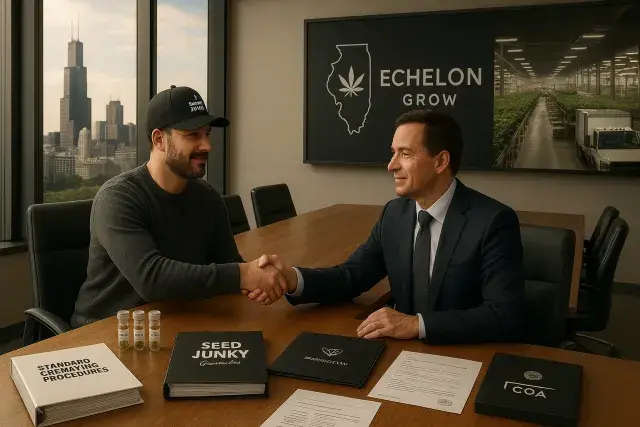
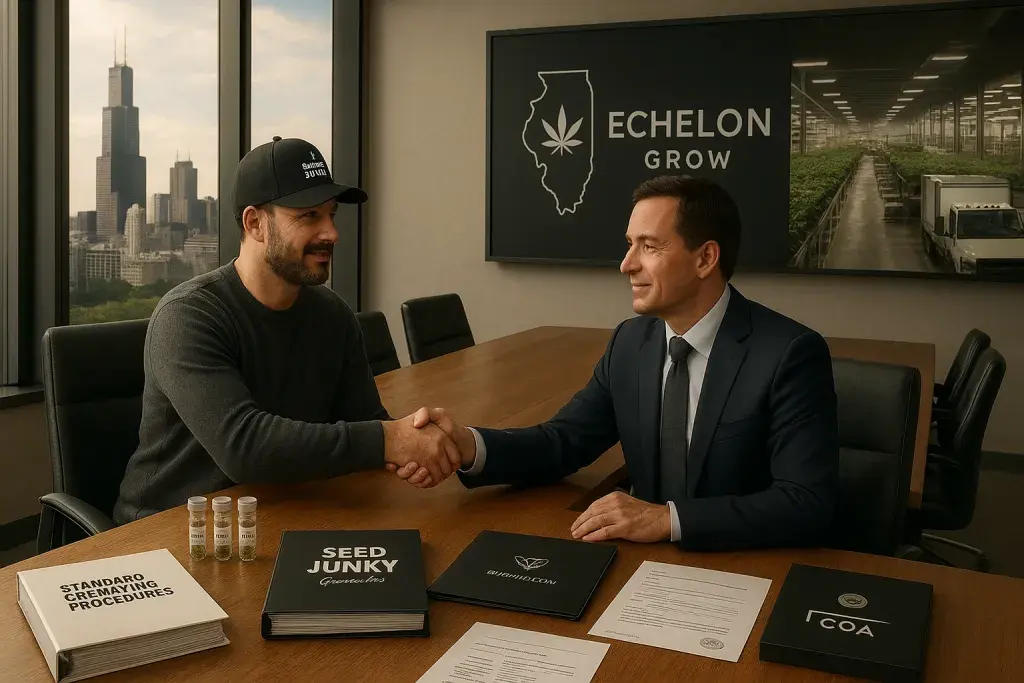
Seed Junky Genetics has formalized an exclusive intellectual property licensing agreement with Echelon Grow, naming the company its authorized operator across Illinois's regulated adult-use cannabis market. Under the deal, Echelon Grow takes responsibility for cultivation, processing, packaging, and statewide distribution - executing under Seed Junky's brand standards and proprietary genetics portfolio. For both companies, the framing is deliberate: measured, compliance-first expansion rather than a race to shelf space.
The structure mirrors a licensing model that has gained traction among established cannabis brands looking to extend their reach without acquiring licenses in every jurisdiction themselves. Rather than pursuing direct vertical integration state by state - a capital-intensive path complicated by license caps, residency requirements, and regulatory variation - Seed Junky routes its intellectual property through vetted local operators who already hold the licenses, infrastructure, and compliance records to execute at scale. For operators trying to understand how that model functions in practice across different regulated markets, see how it works in comparable adult-use states where licensed cultivators face similar supply chain and branding alignment pressures. Under the Illinois agreement, Seed Junky supplies proprietary genetics, standardized operating procedures, and quality assurance frameworks; Echelon Grow supplies the operational infrastructure and regulatory standing to move product through the state's licensed wholesale and retail channels.
Why Operator Selection Carries This Much Weight
Seed Junky's founder, JBeezy, cited operational discipline, infrastructure quality, and compliance track record as the basis for selecting Echelon Grow - and that sequencing matters. In a licensed cannabis market, a brand's product integrity is only as strong as its operator's weakest compliance point. Cultivation failures, mislabeled batches, failed COAs, or inventory discrepancies in METRC don't just create operational headaches; they expose the entire supply chain - including the brand licensor - to regulatory scrutiny.
Illinois runs a seed-to-sale tracking requirement through a state-mandated system, meaning every plant, harvest batch, and finished package must be logged and traceable from cultivation through point of sale. For a brand licensing its genetics and standards into that environment, an operator with a clean regulatory record isn't a preference - it's a structural requirement. A single compliance lapse at the cultivation or processing level can pull product off wholesale menus and disrupt retail relationships across the state.
Echelon Grow's selection followed a review of its cultivation infrastructure, executive leadership, compliance history, and capacity for large-scale production. That kind of due diligence is standard practice in serious licensing arrangements, but it's worth stating plainly: the bar for an exclusive IP licensee is higher than for a typical wholesale supplier. Exclusivity means the brand has one shot at the market. If the operator underdelivers on quality or stumbles on compliance, there's no fallback partner already running product through the state's distribution channels.
What the Agreement Actually Covers - and What It Demands
Beyond genetics, the agreement includes cultivation support, standardized operating procedures, and ongoing operational alignment. That last element is where licensing arrangements either hold together or quietly fall apart. Standardized procedures on paper don't guarantee consistent product in the dispensary case unless there's active oversight, regular quality reviews, and a shared accountability structure between licensor and operator.
For Illinois dispensaries sourcing Seed Junky-branded product through Echelon Grow, the practical implication is a wholesale supply line backed by a nationally recognized genetics portfolio and executed by an operator with existing market infrastructure. That combination - brand equity plus established distribution capacity - is meaningful in a state where retail buyers are managing complex wholesale menus, evaluating SKU performance, and looking for reliable, compliant supply partners they don't have to re-qualify every quarter.
Echelon Grow founder Chris Mayer pointed to Seed Junky's proprietary genetics collection and ongoing research and development as factors in the agreement. That's not just brand language. In a mature adult-use market, differentiated genetics tied to recognizable brand standards give retail buyers a reason to allocate shelf space - and give consumers a product identity they can return to. Consistency is the thing. It's harder to achieve than it sounds when cultivation, processing, and packaging are running across a multi-site operation under a shared quality framework.
The Broader Licensing Model and Its Illinois Fit
Seed Junky's approach - selective, long-term partnerships with established operators in individual markets - reflects a model built around brand discipline rather than rapid license accumulation. It's a structurally different bet than multi-state operator expansion through direct acquisition or management agreements, and it carries different risk and reward profiles for both parties.
For Seed Junky, the upside is brand extension into key markets without the capital exposure of direct license ownership or the regulatory complexity of operating across multiple state compliance regimes simultaneously. The risk is dependency on operator performance and the reputational exposure that comes with exclusive branding. For Echelon Grow, the agreement provides access to a recognized genetics portfolio, proprietary cultivation protocols, and the brand equity that comes with being the exclusive state-level partner - alongside the operational and quality obligations that status requires.
Illinois is a substantial adult-use market with a licensed retail network spanning the state, competitive wholesale pricing pressure, and ongoing regulatory requirements that demand consistent compliance documentation from cultivators through dispensary point of sale. Neither company framed this as a fast entry play. That measured posture, if it holds operationally, may be exactly what a compliance-intensive market like Illinois actually rewards.