The federal rescheduling debate has generated more heat than light-partly because the public conversation keeps recycling the same misconceptions that shaped drug policy decades ago. What gets lost is the operational and clinical reality that patients, physicians, and dispensary operators are already managing on the ground, often without adequate research infrastructure, evidence-based protocols, or reliable education frameworks to work from.
That gap between policy debate and patient experience has real consequences inside dispensaries. When someone walks into a dispensary in 2014-or 2024-and asks for help with chronic pain and sleep disruption, the interaction depends almost entirely on how well-trained the budtender is, how thoughtful the dispensary's intake process is, and whether the cannabis POS platform in use can surface relevant product information without crossing into medical advice. Most dispensaries are still figuring this out. The science hasn't caught up fast enough to give operators solid footing, and that's a structural problem, not a staffing one.
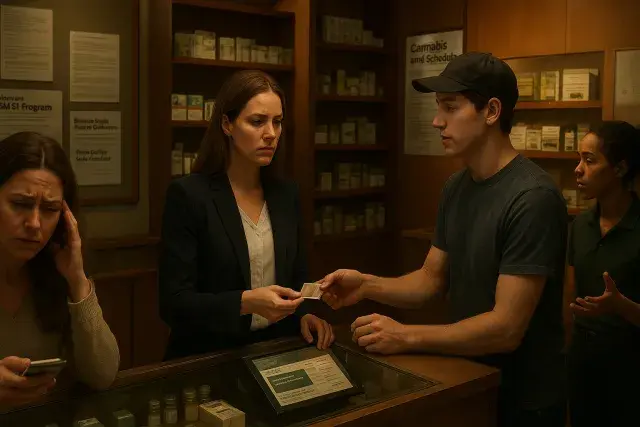
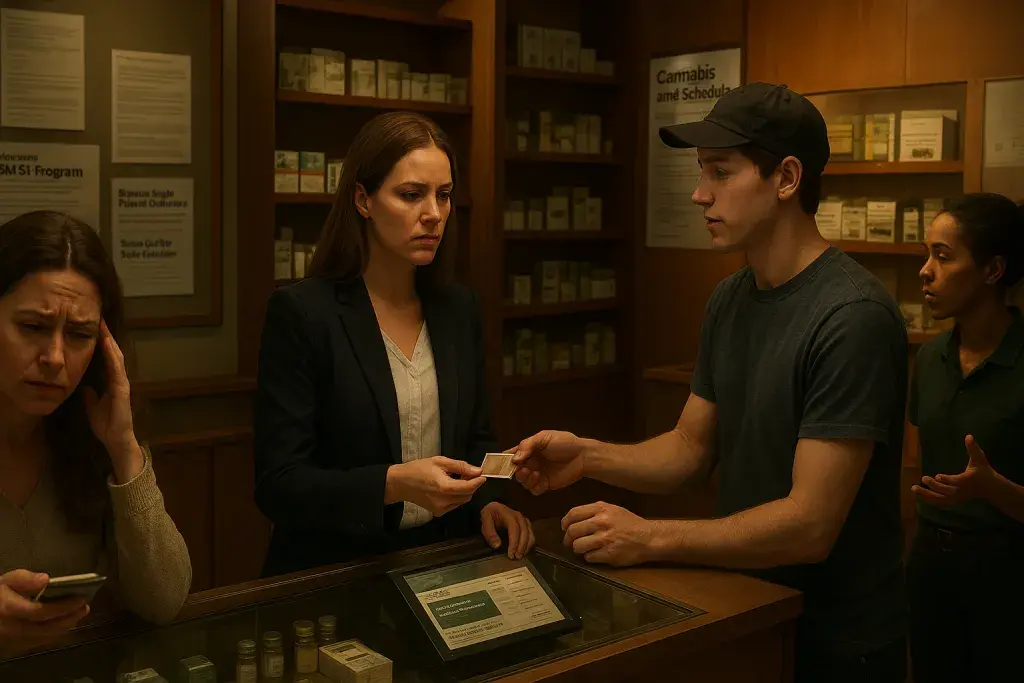
The experience that Canna Research Foundation founder and epidemiologist Brooke Rodgers describes-walking into a Colorado dispensary on opening day in 2014, receiving a transdermal patch without any dosing instruction, and accidentally consuming far more than intended-is not an edge case. It is a routine failure mode in early-stage regulated retail. No one explained to cut the patch into smaller pieces. The product was legal. The sale was compliant. The patient education was nonexistent. That distinction still sits at the center of how dispensaries should be evaluated as retail healthcare-adjacent environments.
Where Dispensary Operations and Patient Safety Intersect
Retail cannabis operators occupy an uncomfortable middle space. Regulators treat them as licensed retailers. Patients treat them as healthcare resources. Budtenders-typically paid hourly, often without clinical training-are expected to manage that gap at the point of sale, sometimes dozens of times per shift. The mismatch is structural and well-documented within the industry, even if it rarely surfaces in rescheduling policy discussions.
Evidence-based dosing guidance, condition-specific product recommendations, and frank conversations about contraindications all require a foundation of research that federal scheduling has historically obstructed. Conducting cannabis research under Schedule I has required regulatory pathways that researchers working with other controlled substances simply do not face. That administrative friction slows the production of the clinical data dispensary operators, physicians, and patients actually need. Rescheduling to Schedule III doesn't resolve every barrier overnight, but it materially lowers them-and that matters for the quality of information that eventually reaches the retail floor.
For multi-state operators and single-location dispensaries alike, the patient education problem isn't abstract. It shows up in product returns, negative reviews, and first-time customers who don't come back. It also shows up in liability exposure. A customer who misuses a high-potency product because dosing wasn't communicated clearly is a compliance and reputational risk, regardless of whether the sale itself was technically lawful. Compliant packaging and accurate COAs on the shelf are the floor, not the ceiling.
What Better Research Actually Changes for Operators
The Canna Research Foundation's work among patients with rheumatologic conditions points to a measurement problem that operators rarely discuss directly: standard clinical endpoints don't capture what patients actually report valuing. Sleep quality. Appetite. Functional participation in daily life. These are the outcomes patients describe-and they are also the outcomes that drive repeat purchase behavior in dispensaries, even if no one in the industry is allowed to say so in advertising.
Here's the practical implication. If the research infrastructure improves-if rescheduling and the new CMS pilot program for Medicare patients create pathways for real-world evidence collection-dispensary operators will eventually have access to better clinical guidance to train staff with. That changes staff development costs, reduces liability exposure, and gives operators something defensible to anchor patient consultations to. Right now, most of that guidance is improvised or borrowed from anecdote.
The CMS pilot program is narrow in scope, but its significance is institutional. It signals that a federal healthcare agency is prepared to treat cannabis as a subject of legitimate clinical inquiry rather than enforcement priority. For the industry, that is an opening-not a solution. The research still has to be conducted, peer-reviewed, and translated into practical clinical guidance before it changes anything inside a dispensary's training manual or a physician's referral practice.
The Education Gap Doesn't Close on Its Own
Rodgers' observation-that cannabis is not as simple as taking a pill-should be printed somewhere near every POS terminal in the country. Patients who approach cannabis without guidance are not making informed choices; they are making experimental ones. That's a patient safety issue. It's also a dispensary operations issue, because poorly managed first experiences suppress the kind of customer retention that keeps licensed operators economically viable against illicit market alternatives.
The regulatory framework, to its credit, is moving-slowly, unevenly, but directionally toward treatment as a legitimate medical subject. What hasn't moved at the same pace is the clinical education infrastructure: physician training, pharmacist awareness, dispensary staff credentialing, and the evidence base that all of those depend on. Rescheduling addresses the research barrier. It does not address the communication gap at the patient level. That part is an operational problem, and it belongs to operators, trade associations, and state regulators as much as it belongs to federal policymakers.
To put it plainly: better policy creates better research. Better research creates better clinical guidance. Better clinical guidance creates better-trained staff and better patient outcomes. The chain is logical, but it is also long-and the patients in dispensaries right now are at the beginning of it, not the end.