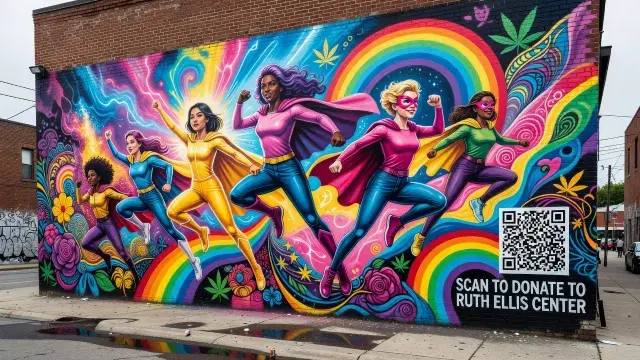
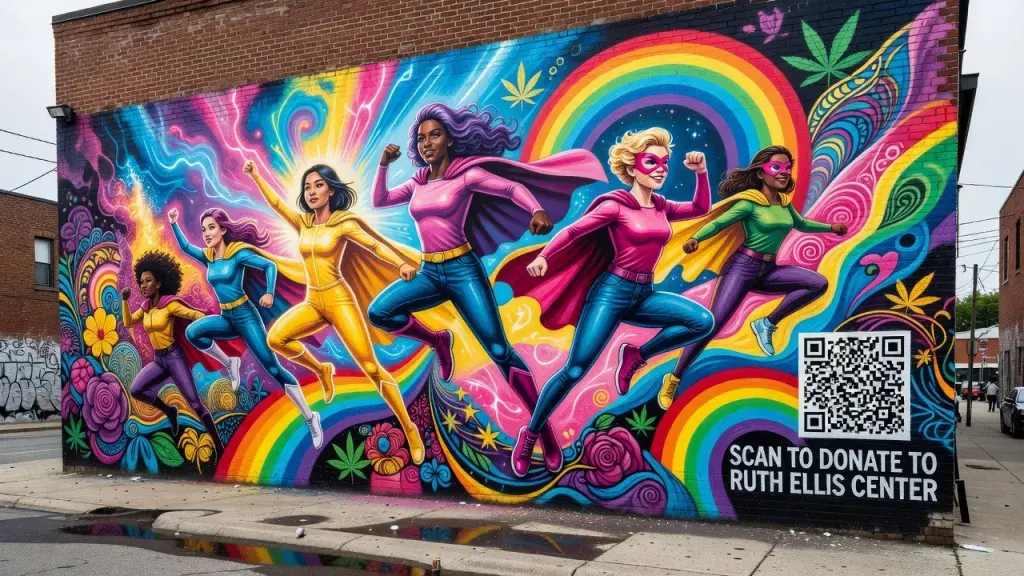
Two Michigan cannabis retailers cut the ribbon this week on a new mural in downtown Ferndale, tying a public art installation directly to a fundraising campaign for at-risk LGBTQ+ youth. "Polychromatic Super You," a 40-by-25-foot piece by Michigan artist Joey Salamon, now covers a wall in the alley at 258 W. Nine Mile Rd., commissioned jointly by JARS Cannabis and HYPE Cannabis. The mural anchors the companies' Smoke with Pride campaign, which channels a share of product proceeds to Detroit's Ruth Ellis Center.
The mechanics of the campaign are worth unpacking, because they reflect a retail model more operators are testing as cannabis brands look for ways to build community goodwill without running afoul of advertising restrictions. Ten percent of proceeds from HYPE products sold at JARS locations, and 100 percent of proceeds from a dedicated JARS x HYPE Smoke with Pride Kit, go to the Ruth Ellis Center. That's a cause-marketing structure familiar to alcohol and consumer packaged goods, now migrating into a cannabis retail sector still working out what compliant, non-promotional community engagement looks like. Behind the scenes, tracking which SKUs qualify for donation allocations requires clean point-of-sale reporting and disciplined inventory categorization - the kind of back-office rigor that separates operators running on spreadsheets from those using platforms built for the job, whether that's dedicated seed-to-sale software or, for operators watching how peer markets handle similar promotions, tools like the best dispensary software oregon retailers rely on to segment sales data by campaign, product line, or donation tier.
Why Retailers Are Betting on Cause Marketing
Cannabis companies operate under tighter advertising constraints than most consumer industries - no billboards near schools, no health claims, limited social media reach in many states. Public art and charitable tie-ins offer a workaround: they generate visibility without functioning as direct product promotion. A mural doesn't list THC percentages or price points. It doesn't need a compliant packaging disclaimer. That distinction matters for retailers trying to build brand presence in markets where paid advertising options are narrow and regulators watch closely for anything resembling youth-targeted messaging.
The QR code embedded in the mural is a small but telling detail. It routes foot traffic - much of it likely unrelated to cannabis retail at all - toward donation and resource pages for the Ruth Ellis Center, rather than toward a dispensary menu or loyalty program signup. That's a deliberate choice, and it keeps the initiative squarely in community-support territory rather than customer-acquisition territory, which matters if regulators ever scrutinize how cannabis operators use charitable partnerships to build brand recognition.
What Operators Should Take From This
Multi-location operators and single-store owners alike face the same underlying question: how do you build local relevance in a category where traditional marketing tools are restricted? Ferndale's mural points to one answer - invest in public-facing projects that stand independently of product sales, then let a modest percentage-of-proceeds mechanism do the fundraising work quietly in the background. It's not a strategy that moves wholesale pricing or shows up on a tax bill, but it does something arguably more durable: it builds trust with a local community and regulators watching how cannabis retail behaves as a neighbor, not just a taxpayer.
- Cause-marketing tie-ins must avoid functioning as disguised product advertising under most state cannabis marketing rules.
- Accurate SKU-level tracking is required to verify which sales qualify for donation allocations, a compliance and accounting task, not just a marketing one.
- Public art installations sit outside typical cannabis advertising restrictions, making them a lower-risk community engagement tool.
- Retailers should document proceeds donated to nonprofit partners for both transparency and 280E-related recordkeeping purposes.