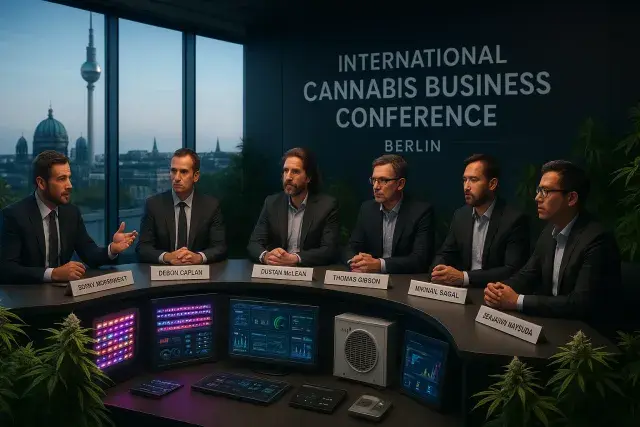
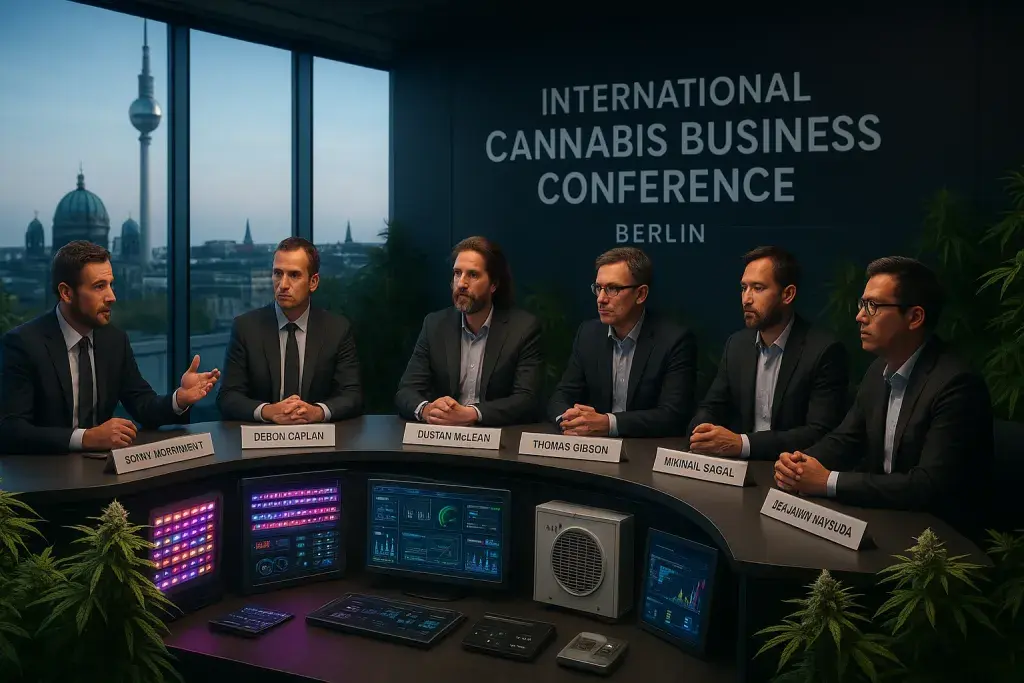
Every downstream segment of the legal cannabis industry - retail, wholesale, infused products, delivery - runs on what licensed cultivators produce. Without a stable, high-quality supply chain at the growing end, the rest of the business falls apart. That structural reality was front and center at the International Cannabis Business Conference in Berlin, where a panel of cultivation technology specialists examined how energy storage, lighting systems, environmental controls, and production efficiency tools are changing the economics of cannabis growing in regulated markets.
The stakes are real for operators across the supply chain. Cultivators operating in legal markets face mounting cost pressure from energy consumption, labor, regulatory compliance, and the ongoing need to hit consistent potency and quality targets that satisfy both state testing requirements and wholesale buyers. Resources like indicaonline.com illustrate how market-specific operational demands - licensing structures, traceability requirements, and retail compliance obligations - vary by jurisdiction, which means cultivation operations feeding those markets have to adapt their production standards accordingly. A batch that clears testing in one state may not meet the documentation or cannabinoid profile expectations of another.
The Berlin panel, moderated by Sonny Moerenhout of Cultivators, brought together practitioners rather than theorists. Deron Caplan, PhD, Managing Partner at Sostanza; Dustan McLean, President of Parkland Flower and a Cultivation Partner of Auricanna; Thomas Gibson, Founder and CEO of Grand Master LED; Mikhail Sagal, President of TSRgrow; and Benjamin Matsuda of Grow Pros Solutions each brought operational experience from different corners of the cultivation technology sector. That mix matters - lighting engineering, environmental control systems, and crop steering are distinct disciplines, and the interaction between them is where the real efficiency gains happen.
Where the Technology Is Actually Moving the Needle
Cultivation lighting is one of the clearest examples of technology shifting the unit economics of cannabis production. LED systems have matured considerably from their early iterations, and purpose-built horticultural LEDs designed specifically for cannabis - rather than adapted from broader agricultural use - are now capable of delivering targeted light spectra that influence cannabinoid development, plant structure, and harvest timing. Gibson's work at Grand Master LED sits squarely in this space. The efficiency difference between legacy high-pressure sodium fixtures and current-generation LED arrays is substantial enough to affect energy costs at scale, which in turn affects the price a licensed producer can offer wholesale buyers.
Environmental control systems - HVAC, humidity management, CO2 enrichment, and airflow - interact directly with lighting decisions. Run your lights at higher intensity without dialing in your vapor pressure deficit and you're not gaining yield; you're stressing the crop and inviting pathogen risk. Sagal's TSRgrow focuses on this integration: the idea that production efficiency requires all environmental variables to be managed as a system rather than as separate inputs. That's where AI-driven analytics enter the conversation. Automated monitoring that tracks temperature, humidity, and CO2 across a facility in real time - and flags deviations before they affect plant health - reduces the labor cost of constant manual monitoring and reduces the risk of a batch failing to meet quality standards.
Crop Steering and the Push for Precision Agriculture
Matsuda's focus on spectral crop steering represents one of the more technically demanding applications on the panel. Crop steering uses deliberate environmental and light manipulations to guide plant physiology - pushing toward vegetative growth or reproductive development depending on what the cultivator wants at a given stage. Done well, it can improve cannabinoid density and terpene expression without extending the grow cycle. Done poorly, it adds stress without payoff. The margin for error in a commercial facility growing for wholesale supply contracts is narrow; buyers specify profiles, and consistency across batches is a baseline expectation, not a bonus.
Caplan's background in cannabis plant science at Sostanza adds an academic rigor to what can otherwise become a vendor-driven conversation. The gap between what a technology company claims its system can do and what actually happens in a licensed production facility - under real growing conditions, with real regulatory oversight - is sometimes significant. Operators evaluating cultivation tech need to ask for performance data from comparable facilities, not just controlled demonstrations.
What This Means for Operators Across the Supply Chain
For dispensary operators and wholesale buyers, the quality of cultivation technology upstream directly affects what ends up in the store. Potency consistency, terpene profiles, and visual quality are all influenced by how well a cultivator controls its production environment. A producer using outdated equipment running on inefficient energy systems is carrying higher fixed costs per pound - costs that eventually appear in wholesale pricing or in compressed margins that reduce the operator's ability to invest in quality improvement.
McLean's dual role at Parkland Flower and Auricanna reflects a common structure in mature regulated markets: cultivation operations that are directly tied to retail or distribution partnerships benefit from tighter feedback loops between what consumers are buying and what the grow is producing. That integration doesn't eliminate the complexity of running a licensed facility, but it does reduce the information lag between market demand and production planning.
The broader point the Berlin panel surfaced is straightforward: cultivation is not a commodity input that the rest of the industry can treat as settled. It is technically demanding, capital intensive, and subject to the same regulatory scrutiny - testing, traceability, licensing - as every other tier of the licensed supply chain. The technology choices cultivators make today affect product quality, cost structure, and compliance readiness for years. That's not a peripheral concern for operators, investors, or regulators. It sits at the center of whether a legal cannabis market produces a product that holds its ground against the illicit supply.