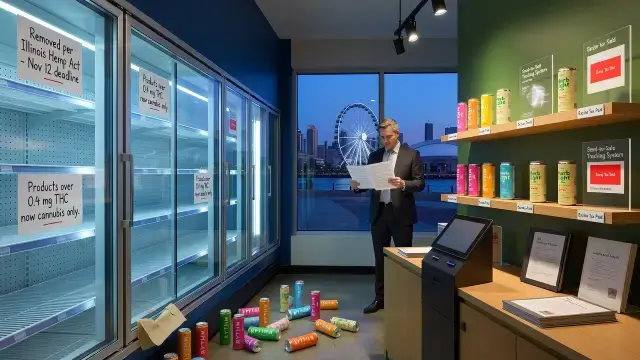
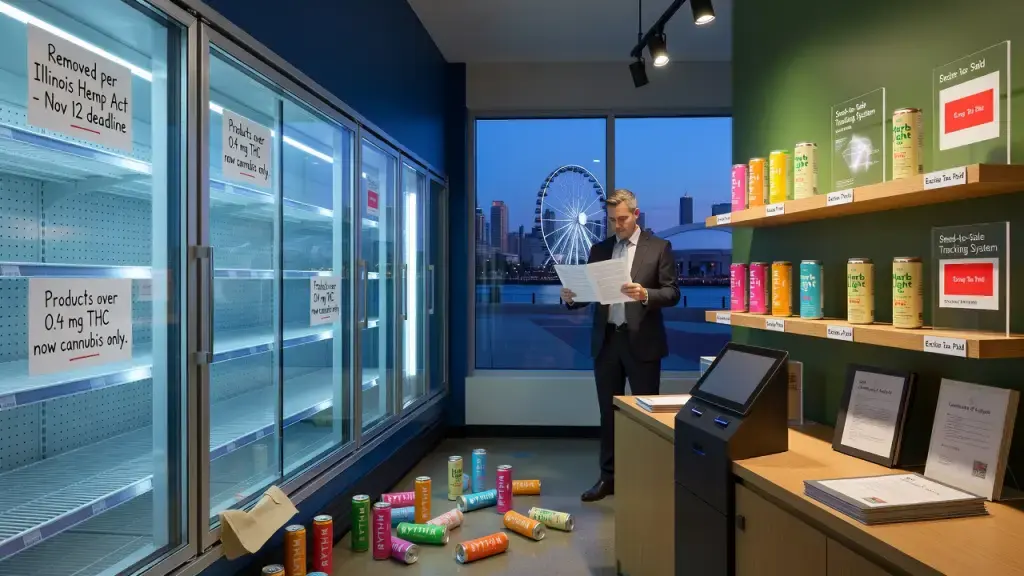
Illinois liquor stores have a hard deadline this week, and it has nothing to do with alcohol. Starting Nov. 12, hemp-derived THC drinks that exceed 0.4 milligrams of total THC per container can no longer be sold anywhere except licensed cannabis dispensaries. For an industry that built retail distribution around grocery stores, bars and liquor chains like Binny's Beverage Depot, that's not a tweak to the rules. It's a different business model entirely.
A milligram threshold that changes everything
The new limit under the Illinois Hemp Act sounds almost technical until you run the math. A standard 5-milligram THC beverage - already considered a low-dose product by industry standards - contains 12.5 times the new allowable amount. A 10-milligram drink blows past it by 25 times. In practice, that means nearly every beverage currently sitting in liquor store coolers becomes noncompliant inventory overnight unless retailers pull it or sell through before the deadline. Retailers have until Nov. 11 to clear affected SKUs, a compressed window that's forcing fast inventory decisions with little margin for error.
This is the mechanism driving the shift: once a product crosses that 0.4-milligram line, it's reclassified as cannabis rather than hemp, and cannabis - under Illinois law - can only move through licensed dispensaries with the seed-to-sale tracking, age verification and compliant packaging those businesses are already built around. Liquor stores, convenience stores and bars were never licensed for that. They can't be, under the current framework.
Why regulators drew the line here
State Rep. Will Guzzardi framed the law as consumer protection paired with competitive fairness for licensed cannabis operators who've spent years absorbing excise tax obligations, testing costs and 280E tax exposure that hemp-derived THC sellers largely sidestepped. That's the core tension regulators were responding to: a parallel, lightly regulated market selling intoxicating products - sometimes in packaging critics said appealed to kids - without the lab testing, COA documentation or retail controls dispensaries are required to maintain.Illinois dispensary operators have long argued this amounted to an uneven playing field. Cannabis retailers carry licensing costs, compliance logs and tax burdens that hemp beverage sellers, operating under the looser 2018 Farm Bill framework, didn't face in the same way.
What it means for brands and shelf space
Beverage makers aren't shutting down quietly, but they are scrambling. Chicago-based Herb Light is reformulating its 1-milligram product down to 0.4 milligrams just to stay on liquor store shelves - a narrow compliance path that preserves retail access but shrinks the product's dose to nearly negligible levels. Other manufacturers, particularly those built around higher-dose formulas sold through traditional retail, don't have that option. For them, the choice is reformulate, pivot to dispensary-only distribution, or exit the category.RYTHM chairman Ben Kovler's comment that THC beverages represent "a fourth adult beverage category, alongside beer, wine and spirits" captures the industry's broader ambition - and the risk now facing it. Products like RYTHM's Señorita line had found placement at venues including Navy Pier and the United Center. Confining sales to dispensaries doesn't just shrink distribution; it changes the customer. Cannabis industry publication Grown In's Brad Spirrison notes that low-dose drinks appealed specifically to consumers who wanted an alternative to alcohol without walking into a dispensary. Moving that product behind dispensary doors risks losing exactly the customer base the category was built to reach.
A federal deadline that isn't helping
Illinois isn't waiting on Washington. The federal government has pushed its own hemp THC deadline to Dec. 11, leaving Illinois retailers and brands navigating a stricter state timeline while federal policy still lags behind. For multi-state operators and beverage makers selling across state lines, that mismatch creates real operational friction - different compliance deadlines, different thresholds, different packaging requirements depending on where a truck crosses a state border.For dispensary operators, the upside is more straightforward: beverage SKUs now funnel exclusively through licensed channels, adding wholesale volume and shelf categories that liquor stores can no longer touch. Whether consumers follow the product into dispensaries, or simply drink less THC and more alcohol instead, remains the open question nobody in this industry can answer yet.