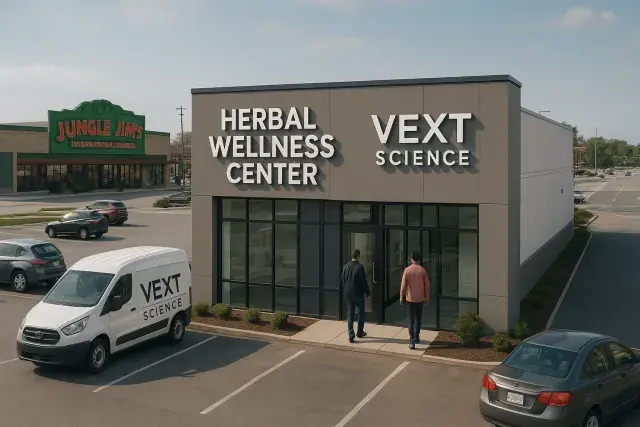
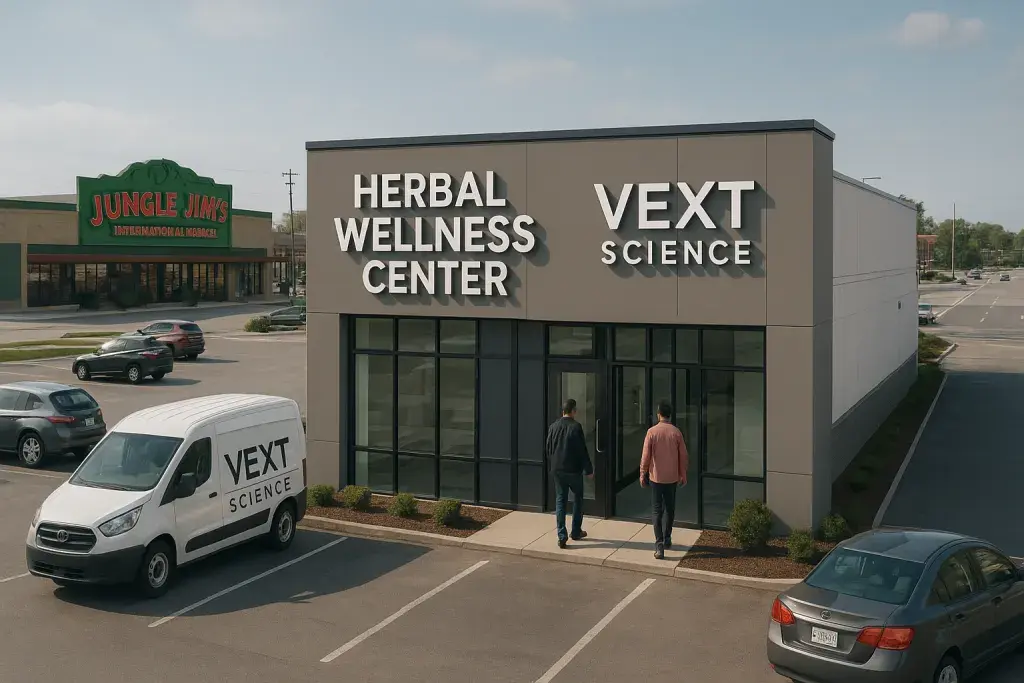
Vext Science has opened its Herbal Wellness Center dispensary in Fairfield, Ohio, adding a sixth retail location to its state footprint and bringing the vertically integrated operator two stores away from Ohio's eight-dispensary license cap. The approximately 3,825-square-foot store, positioned just off Route 4 in a northern Cincinnati suburb, serves both medical patients and adult-use consumers - a dual-access model that has defined Ohio's regulated market since the state expanded to recreational sales.
Location Is the First Line of Defense in Retail Economics
Siting a dispensary well is not glamorous work, but it may be the single most consequential operational decision a multi-state operator makes before a store turns its first dollar. Vext put the Fairfield location adjacent to Jungle Jim's International Market - a regional retail institution that reliably pulls heavy, recurring consumer traffic - within a commercial node that also includes national retailers and a fitness center. That kind of co-tenancy reduces the burden on the dispensary itself to generate destination visits, which is meaningful in a regulated environment where advertising options remain sharply constrained.
Ohio prohibits dispensary advertising that targets or appeals to minors, and cannabis retailers operating in the state must follow strict rules around signage, promotional content, and point-of-sale marketing materials. In that context, being next to an established traffic magnet functions as a structural substitute for the kind of above-the-line marketing that conventional retailers take for granted. Foot traffic that arrives organically - customers already in the parking lot for another reason - converts at lower customer acquisition cost than traffic driven by paid placement. That is a real operational advantage, not a decorative one.
Vertical Integration and the Ohio Store Cap
Vext's stated strategy in Ohio is direct: open well-located stores, supply them from its own cultivation operation, and convert that margin structure into cash. The vertical integration piece matters here. A dispensary sourcing exclusively from a captive cultivation and processing operation can manage wholesale cost of goods at the company level rather than paying market prices to third-party wholesalers - which, in a price-compressed adult-use market, is one of the more defensible positions a mid-size operator can hold.
Ohio caps single-entity dispensary licenses at eight locations. Vext now operates six. That means two more stores stand between the company and its statutory ceiling in the state - a constraint that sharpens the logic of execution at each individual location. There is no endless pipeline of new units to paper over underperformers. Every store in the portfolio either pulls its weight or it shows up clearly in the financials. That kind of concentration focuses operational discipline in ways that larger multi-state operators with sprawling retail networks do not always experience.
CEO Eric Offenberger framed it plainly: the Fairfield opening is one more step in what he described as a disciplined retail build-out, with each new store strengthening a model already in operation rather than introducing untested strategy. Whether Fairfield stabilizes on the timeline the company projects will depend on execution - staffing, inventory management, compliance posture, and how quickly adult-use consumer behavior in that specific corridor matures.
What Stabilization Actually Looks Like in Dispensary Operations
Operators use the word "stabilization" as shorthand for the period after a new store opens during which throughput, average transaction value, and repeat-visit rates normalize. In practice, it is a stretch of months that tests every system a dispensary runs - seed-to-sale tracking integration with METRC, POS terminal configuration, budtender training on compliance protocols, compliant packaging inventory management, and cash handling or cashless payment infrastructure that satisfies both state regulators and banking partners.
Ohio dispensaries operating in the adult-use space face the same banking friction that characterizes regulated cannabis retail broadly. Federal illegality keeps most traditional financial institutions cautious, which means many operators still rely on cash-heavy operations, credit union relationships, or fintech intermediaries that carry their own compliance overhead and fee structures. For a store in a busy commercial corridor expecting consistent consumer traffic, cash management at scale is not a minor back-office concern - it is a recurring operational cost and a compliance risk that requires documented controls.
There is also the 280E question, which sits over every cannabis retailer regardless of state. The federal tax provision that disallows standard business deductions for companies trafficking in Schedule I controlled substances continues to compress net margins across the industry. Vertically integrated operators like Vext can allocate more cost to cost of goods sold - which is deductible even under 280E - through their cultivation and processing operations, but the structural tax burden remains a defining financial reality for licensed cannabis businesses in every state.
Six Stores In, Two to Go
Vext's Fairfield opening does not change the Ohio market overnight. What it does is add another data point to the company's Ohio operational model - another store drawing from the same cultivation supply chain, adding revenue against the same fixed overhead, and testing how well the playbook holds in a distinct local market. If the Fairfield location performs as expected, it validates the site-selection and supply logic. If it undershoots, the company has limited runway to absorb that underperformance before reaching the license ceiling.
For other operators watching Ohio's adult-use market develop, the Fairfield opening is a reminder that in a license-capped environment, real estate decisions carry compounding weight. You do not get eight chances to find the right locations. You get eight - and then you manage what you have.