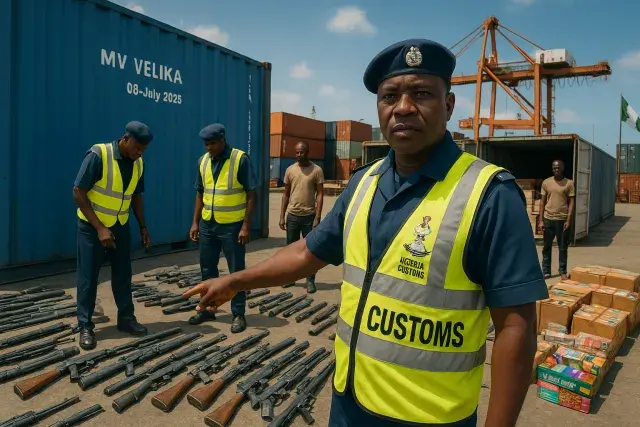
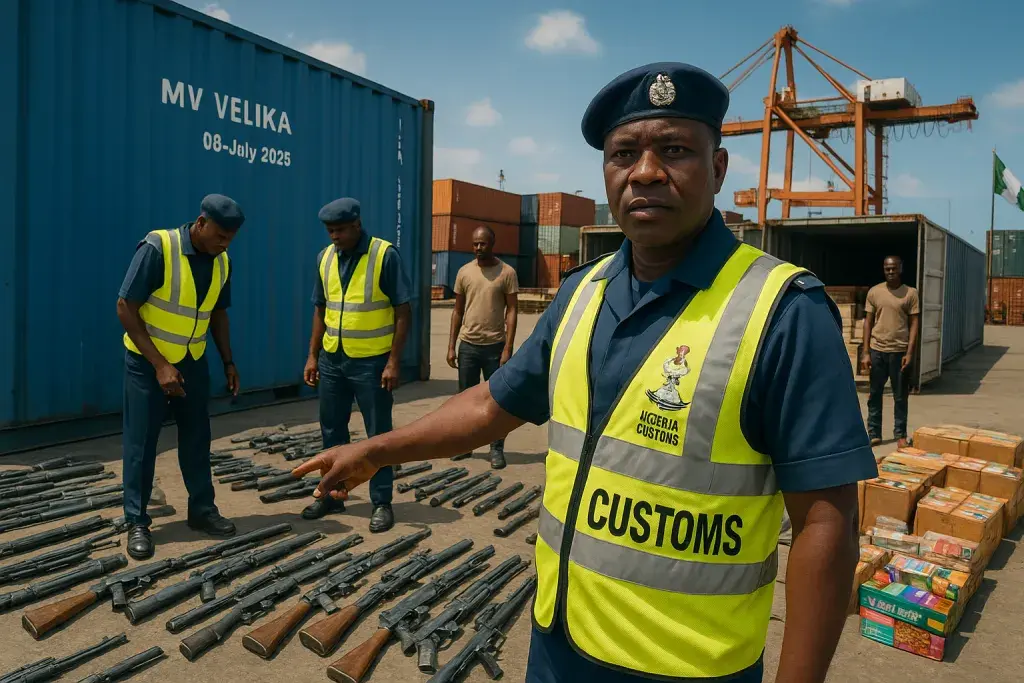
Nigeria Customs officials at Tincan Island Port have intercepted a shipping container hiding components for more than 140 pump-action rifles, alongside two separate 40-foot containers carrying cannabis-infused cookies, gummies and pre-roll products valued at over ₦373.8 million. Comptroller General Adewale Adeniyi announced both seizures on Thursday, framing them as evidence of an intelligence-led enforcement push against smuggling networks exploiting commercial shipping lanes.
The weapons container arrived aboard MV VELIKA on 8 July 2026 and was flagged for enhanced screening by the Service's risk management system before inspectors found knocked-down parts preliminarily identified as JoJeff pump-action rifles. Two suspects are now in custody, while a third remains at large. The cannabis products, meanwhile, were concealed among used vehicles, generators and batteries - a packing method that mirrors how licensed operators elsewhere have had to tighten chain-of-custody documentation just to prove goods moved through legitimate channels. In regulated markets, that kind of traceability is exactly what seed-to-sale software and point-of-sale systems are built to establish; a dispensary running compliant cannabis POS in Missouri, for instance, logs every batch from intake to retail sale precisely so regulators never have to guess where a product came from. compliant cannabis POS in Missouri
Why Concealment Tactics Matter Beyond Nigeria
The interception is a customs and border security story first, but it carries a lesson that regulated cannabis markets know well: unlabeled, untraceable product is a public safety liability regardless of jurisdiction. The seized Delta-8 cookies, gummies and pre-rolls had no verified chain of custody, no lab testing, and no compliant packaging disclosing potency or ingredients. In licensed markets, every one of those gaps would trigger a compliance failure - a missing certificate of analysis, an unlogged SKU, a batch that never cleared inventory reconciliation. Smuggled goods skip all of it, which is precisely why they are dangerous to consumers and difficult for legitimate operators to compete against on price.
The Enforcement Signal Ahead of Elections
Adeniyi's warning about the coming election cycle is worth sitting with. He said criminal networks routinely try to exploit ports and borders during politically sensitive periods, and that the Service intends to "redouble" inspection efforts rather than ease them. That posture - tightened risk profiling, closer scrutiny of mixed-cargo containers, and public appeals for intelligence tips - resembles the layered compliance checks that licensed cannabis operators in the United States now take for granted: manifest verification, third-party lab testing, and reconciled inventory logs that leave a digital trail auditors can follow.
What Legitimate Trade Channels Are Up Against
The core problem Adeniyi described is that criminal actors hide contraband inside otherwise ordinary shipments of vehicles, generators and batteries, betting that customs officers won't dig deep enough. That bet increasingly fails when risk-based targeting flags containers for secondary inspection. For any business - cannabis retail included - the underlying principle holds: traceable, documented supply chains protect consumers and legitimate operators alike, while opaque ones invite exactly the kind of enforcement action Tincan Island Port just carried out.