Few countries carry a more striking contradiction in the global cannabis industry than Malawi. The landlocked southern African nation produced Malawi Gold - a sativa-leaning landrace that became one of cannabis culture's most referenced strains - yet recreational use remains a criminal offense carrying penalties up to life imprisonment. For licensed operators, investors, and compliance professionals tracking international cannabis markets, Malawi represents a case study in how cultural identity and regulatory reality can occupy entirely different territories.
That gap matters operationally. Cannabis businesses expanding into new markets, or sourcing genetics for breeding programs, need accurate legal intelligence - not the version filtered through outdated travel forums or enthusiast publications. The difference between a country that tolerates informal markets and one that prosecutes them severely is the kind of distinction that determines whether a supply chain deal or a genetics partnership carries manageable risk or serious legal exposure. Regulated operators in the United States already understand this calculus well: a pos system for dispensary maryland must track every transaction precisely because the gap between informal practice and compliant documentation carries its own legal consequences, regardless of how enforcement looks on a given day. The principle holds internationally.
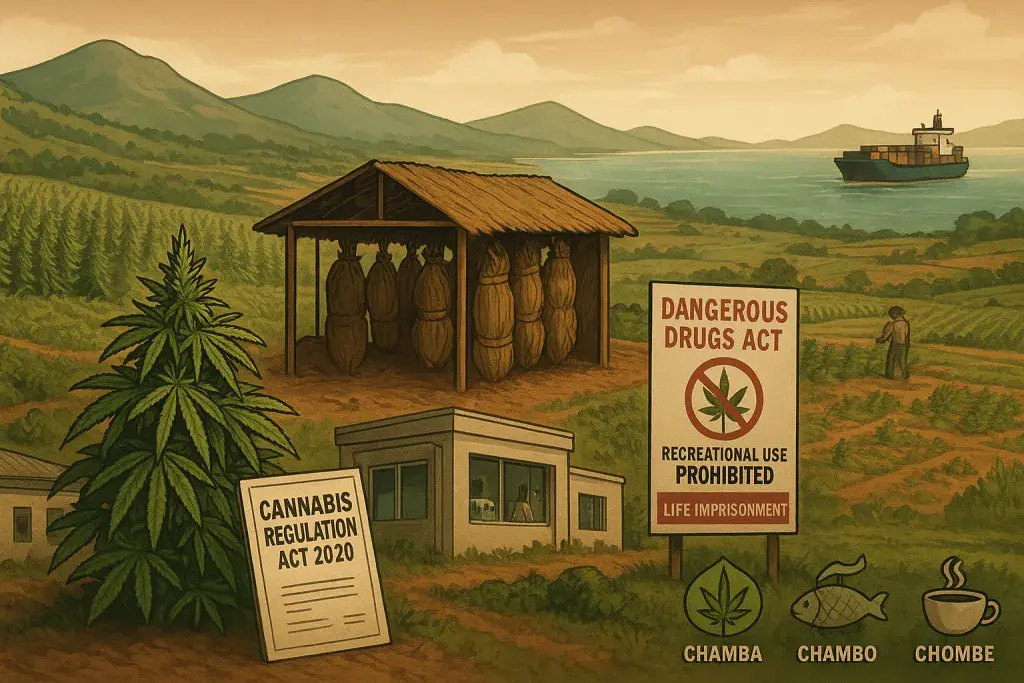
Malawi's Cannabis Regulation Act, No. 6 of 2020 - assented to on April 30, 2020 - created a licensed framework for medicinal and industrial cannabis cultivation and established the Cannabis Regulatory Authority, headquartered in Lilongwe. The reform was significant. It opened legal pathways for export-oriented cultivation, positioned Malawi as a prospective supplier to European pharmaceutical cannabis markets, and gave licensed operators a compliance structure. What it did not do is equally important for anyone reading headlines without reading the statute: it did not decriminalize personal possession, did not create a domestic patient-access program, and did not reduce the criminal penalties for recreational use. The Dangerous Drugs Act remains intact. Unauthorized possession is still prosecutable with fines and imprisonment, including, under the statute's framework, imprisonment for life.
What the 2020 Reform Actually Built - and What It Didn't
Malawi's cannabis reform was a calculated economic decision, not a liberalization of consumer access. The country's agricultural economy had relied heavily on tobacco for decades. As global tobacco demand declined under health-driven regulatory pressure, Malawi's government looked at what it had: established growing expertise, suitable highland climate and elevation, and a strain - Malawi Gold - with genuine international name recognition in cannabis-culture circles. The 2020 Act was designed to convert those assets into licensed export revenue.
The Cannabis Regulatory Authority moved quickly. By early 2021, it had issued licenses to multiple companies. The licensing framework's compliance requirements, however, effectively concentrated the legal industry among larger corporate operators and structured cooperatives. Individual smallholder farmers - many of whom had grown chamba informally for generations as a supplementary cash crop alongside tobacco and maize - remained largely outside the formal structure. That disconnect between who holds the traditional cultivation knowledge and who holds the licenses is a tension that Malawi's regulatory framework has not yet resolved.
For international investors and businesses assessing Malawi as a sourcing or partnership market, the structure looks familiar: a new regulatory body, an early licensing cycle, and a formal sector that is export-focused while informal cultivation continues in parallel. The compliance infrastructure is still maturing. GACP-certification requirements for European pharmaceutical market access mean that licensed operators must build documentation, testing, and traceability systems from the ground up - the same kind of seed-to-sale accountability that regulated cannabis markets in North America have spent years implementing.
Malawi Gold as a Genetic and Commercial Asset
Malawi Gold's commercial relevance extends well beyond its cultural history. As a landrace strain, it represents genetic material that has evolved without deliberate hybridization over centuries - shaped by the highland soils, altitude, and rainfall patterns of the Lake Malawi corridor, particularly the Nkhotakota District and the Salima region. The Nkhotakota and Salima growing areas are most closely associated with the highest-quality genetics in cannabis-culture documentation.
Most commercial cannabis consumed globally traces its lineage to landrace strains that have since been hybridized to the point where the original genetics survive only in approximated form. Malawi Gold occupies a different position: a strain that has maintained its character through generations of cultivation in its native environment. That genetic integrity has real value for breeders, pharmaceutical researchers, and licensed cultivators looking to develop differentiated product lines.
The Malawi Cob - a traditional curing method involving tightly wrapped, warm, low-oxygen conditions - produces a noticeably different product from air-dried or commercially processed cannabis. Cannabis-culture sources consistently describe it as altering aroma, texture, and the character of the experience. The specific biochemical changes are not well documented in peer-reviewed research, but the tradition's persistence among growers reflects its functional distinctiveness. For licensed operators interested in terroir-driven or craft-positioned cannabis products, this kind of traditional processing knowledge represents intellectual property of real commercial weight.
The Compliance Reality for Travelers and International Partners
To put it plainly: there is no legal recreational cannabis market in Malawi, and no decriminalization exists. The informal market's visibility in tourist areas - and the inconsistency of on-the-ground enforcement - has created a perception gap that older travel resources have done nothing to correct. That perception gap is genuinely dangerous. Enforcement does occur. Tourists who engage with the informal market face not only criminal prosecution but risks of extortion, fraud, and encounters with individuals working with or impersonating law enforcement. No legitimate business rationale justifies that exposure.
For licensed cannabis businesses assessing Malawi as a future market - whether for genetics sourcing, contract cultivation, or export partnership - the current picture is of a country with credible reform architecture and a developing regulatory authority, operating in a jurisdiction where recreational prohibition remains absolute and the compliance infrastructure for legal operations is still being built out. That is not a disqualifying condition; plenty of markets have followed exactly this arc. It does mean that timelines for legal commercial engagement need to account for regulatory maturation, not just the 2020 legislation's headline.
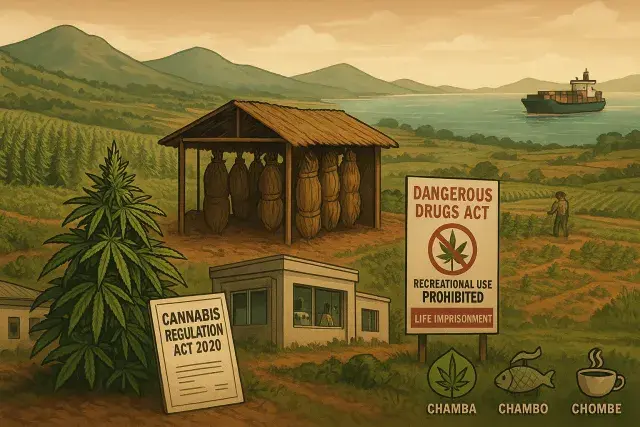
Chamba sits alongside chambo fish and chombe tea as one of Malawi's Three Big C's - a shorthand for how deeply cannabis is embedded in the country's cultural and economic identity. That cultural weight is real. But in regulated cannabis markets, cultural significance does not substitute for legal authorization. Malawi Gold's reputation was built outside any legal framework. Its next chapter, if Malawi's export sector develops as the 2020 Act intended, will have to be built inside one.