FELTON, Del. - Delaware's recreational cannabis market closed out its first full year with more than $53.4 million in adult-use sales, according to the Office of the Marijuana Commissioner, roughly double what the state's medical-only program generated the year before. That growth trajectory matters beyond the balance sheet: it's an early signal of how a tightly licensed, single-state market behaves once adult-use doors open, and it offers a data point other East Coast states will watch closely as they build out their own regulatory frameworks.
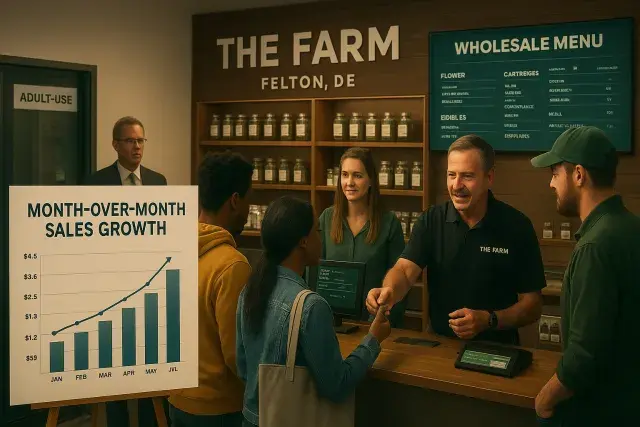
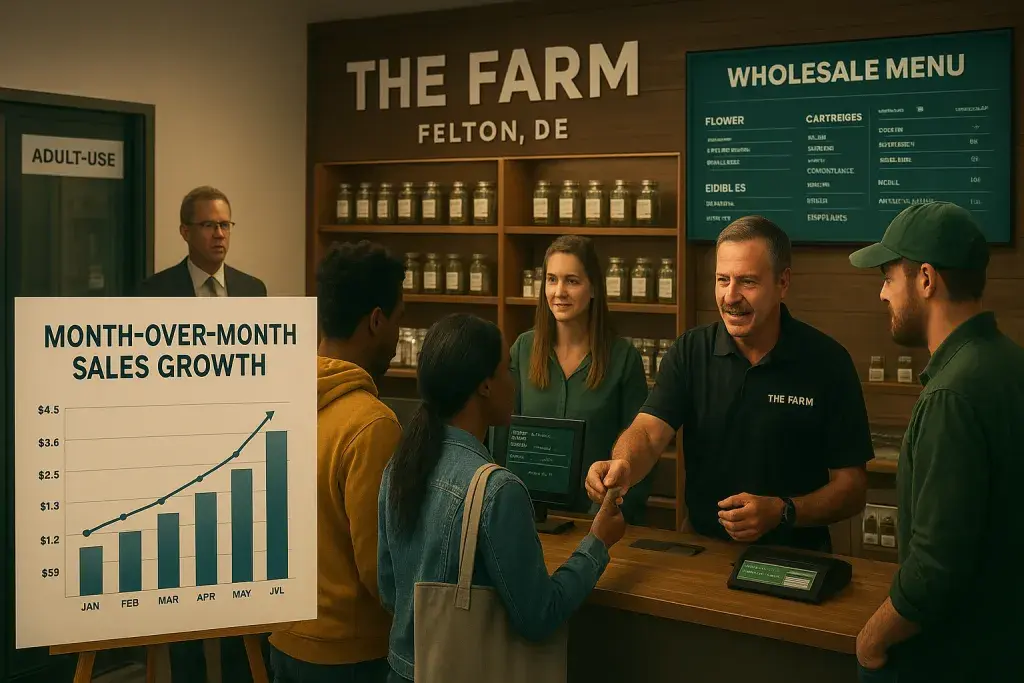
Marijuana Commissioner Joshua Sanderlin told WBOC the state is seeing month-over-month sales increases, with July marking the biggest month to date. That kind of sustained lift usually points to two things happening at once: more retail access points coming online, and operators refining the basics of retail execution - inventory turns, staffing, wholesale menu management. For multi-state operators and independent dispensary owners alike, the operational backbone behind those numbers matters as much as the topline figure. Point-of-sale infrastructure, seed-to-sale tracking through METRC, and compliant packaging workflows all have to scale in step with foot traffic, or the back office becomes the bottleneck. Some operators watching Delaware's build-out have looked at how neighboring markets handle that scaling problem; a Rhode Island dispensary POS platform, for instance, illustrates how retailers in a comparably sized adult-use market structure inventory and compliance reporting without outgrowing their systems in year one. Rhode Island dispensary POS platform
Thirty-Eight Licenses and the Access Problem
Delaware currently counts 38 active licenses spanning cultivation, manufacturing, retail and testing. That's not a large number for a state market, and it explains why officials keep circling back to "access points" as the thing to watch. Fewer retail doors means longer drive times for consumers and less competitive pressure on pricing - not necessarily a bad thing for early operators' margins, but a real constraint on convenience. Store Manager Jim Van Patten at The Farm in Felton noted his location's drive-thru has been a draw for customers who, in his words, had been waiting years for legal purchases. Convenience formats like that tend to matter more in markets with limited retail density than in saturated ones.
Why Capital Access Remains the Real Bottleneck
Sanderlin didn't sugarcoat the financing problem. Cannabis remains federally illegal, so operators can't walk into a bank for a commercial loan or tap SBA programs the way any other small business would. That pushes founders toward private equity, high-interest specialty lenders, or self-funding - all of which raise the cost of capital and slow the pace at which new cultivators and manufacturers can come online. It also compounds the tax burden created by Section 280E of the federal tax code, which bars cannabis businesses from deducting ordinary business expenses. Put plainly: even a profitable dispensary in a growing market like Delaware's is fighting headwinds that a liquor store or a coffee shop simply doesn't face.
Social Equity Funding and What Comes Next
The state's Social Equity Fund has approved nine grants and distributed more than $1 million to help entrepreneurs enter the licensed market - a modest but meaningful counterweight to the financing gap described above. Whether that funding translates into a meaningfully more diverse operator base will depend on how quickly cultivation and manufacturing licenses convert into actual product on shelves. Sanderlin framed the next phase as being about supplier diversity: more cultivators, more manufacturers, broader SKU selection for consumers. For dispensary buyers building wholesale menus, that's the detail worth tracking - access points alone don't fix a market if the supply chain behind them stays thin.