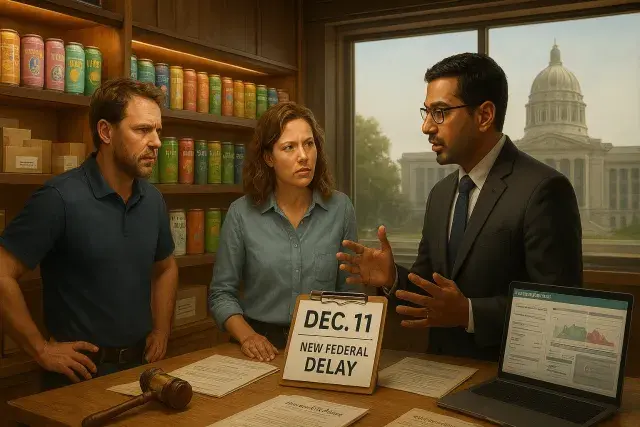
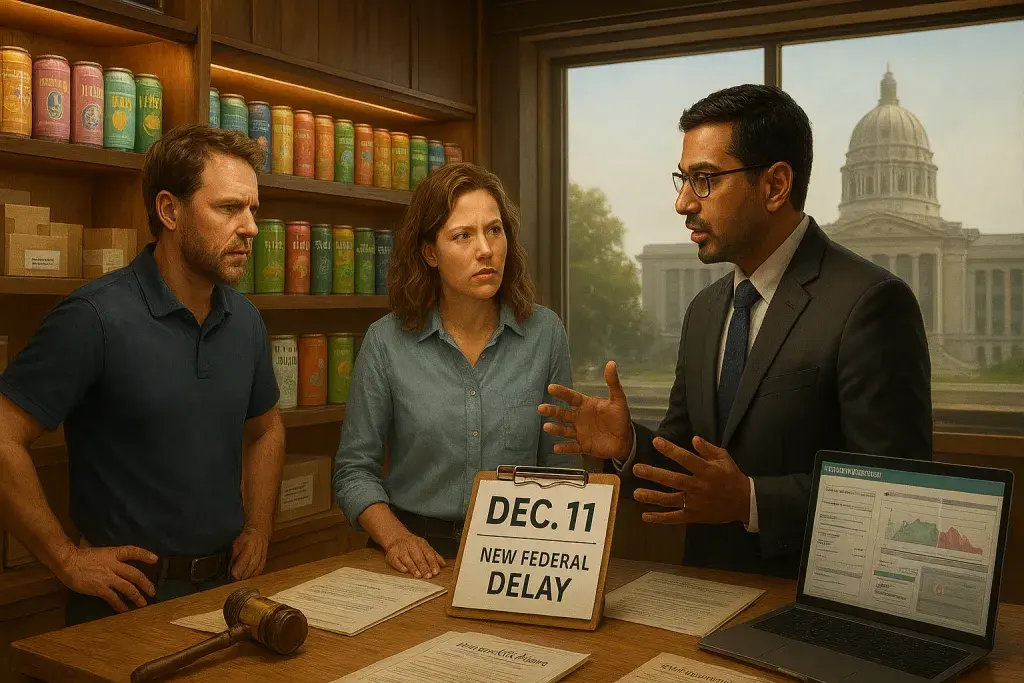
Missouri's Nov. 12 deadline to pull intoxicating hemp products off retail shelves may not land as scheduled. A short-term federal funding bill approved by the U.S. Senate on Aug. 8 would push back the federal ban on intoxicating hemp THC products until Dec. 11 - and under a carve-out written into Missouri's own law, that delay could keep hemp-derived THC beverages in stores even as everything else in the category disappears.
The mechanics here matter more than they might seem to at first glance. Gov. Mike Kehoe signed legislation this spring designed to mirror the federal ban Congress passed last year, but state lawmakers built in a contingency: if Washington delays enforcement, Missouri's own ban narrows to exclude beverages specifically, while edibles, tinctures and other intoxicating hemp products still go dark on schedule. That's a meaningful distinction for operators trying to plan inventory, wholesale menus and compliant packaging runs for the fourth quarter. Retailers managing multi-category SKUs - the kind of operational complexity that pushes many shops toward platforms like dispensary software in Oklahoma and similar regional markets to track compliance across product lines - now face a split outcome where one part of the shelf survives and another doesn't.
The bill still needs House approval and the president's signature before anything is settled, so nothing here is final. But Jay Patel, president of the Missouri Hemp Trade Association, called the 61-31 Senate vote a "good sign," noting bipartisan support and, he said, encouragement from the White House for meaningful federal regulation. Fair enough - but as Patel himself acknowledged, a federal delay doesn't resolve Missouri's underlying legal fight.
A Lawsuit Still Hangs Over the State Ban
The Missouri Hemp Trade Association and a coalition of hemp businesses filed suit last month in the U.S. District Court for the Western District, arguing the state's definitions of hemp and marijuana are unconstitutionally vague. That litigation runs on its own timeline, separate from whatever Congress does with federal funding. Even if the beverage carve-out holds through December, operators can't treat this as resolved - it's a temporary reprieve layered on top of an unresolved legal question, not a settled regulatory framework.
Operators Split Between Relief and Exposure
For businesses built around hemp beverages, the Senate vote offers real short-term clarity. John Grady, who owns Slaphappy Hemporium in Rosebud with his wife Kara, said the vote makes it likely their THC seltzers can keep selling through December. That's a straightforward win for a beverage-first operation. But Grady was candid that the relief is partial: customers are already stocking up on edibles and other products that will disappear from Missouri shelves regardless of what happens in Washington.
That divide illustrates a broader operational reality for hemp retailers right now. Product category matters more than brand loyalty or shelf placement. A store carrying beverages, gummies and tinctures under one roof could see one-third of its catalog survive while the rest gets pulled - forcing inventory write-downs, revised wholesale orders and awkward conversations with distributors mid-quarter. Compliance teams tracking batch testing, COAs and labeling requirements now have to model two different outcomes depending on product type, not just a single go/no-go date.
December 11 Is the New Watch Date
Assuming the House passes the funding measure and the president signs it, Dec. 11 becomes the next real deadline - not a resolution, but a reset. Hemp trade groups, including organizations the Gradys belong to, are pushing to use the extra weeks to secure comprehensive federal rules rather than another temporary patch. Whether that happens is an open question. What's clear is that Missouri retailers, wholesalers and compliance staff are now operating on two overlapping clocks: a federal one tied to congressional funding cycles, and a state one shaped by litigation that could reorder the rules regardless of what Washington decides.